Counter-Offer Calculus: When to Take It, When to Walk
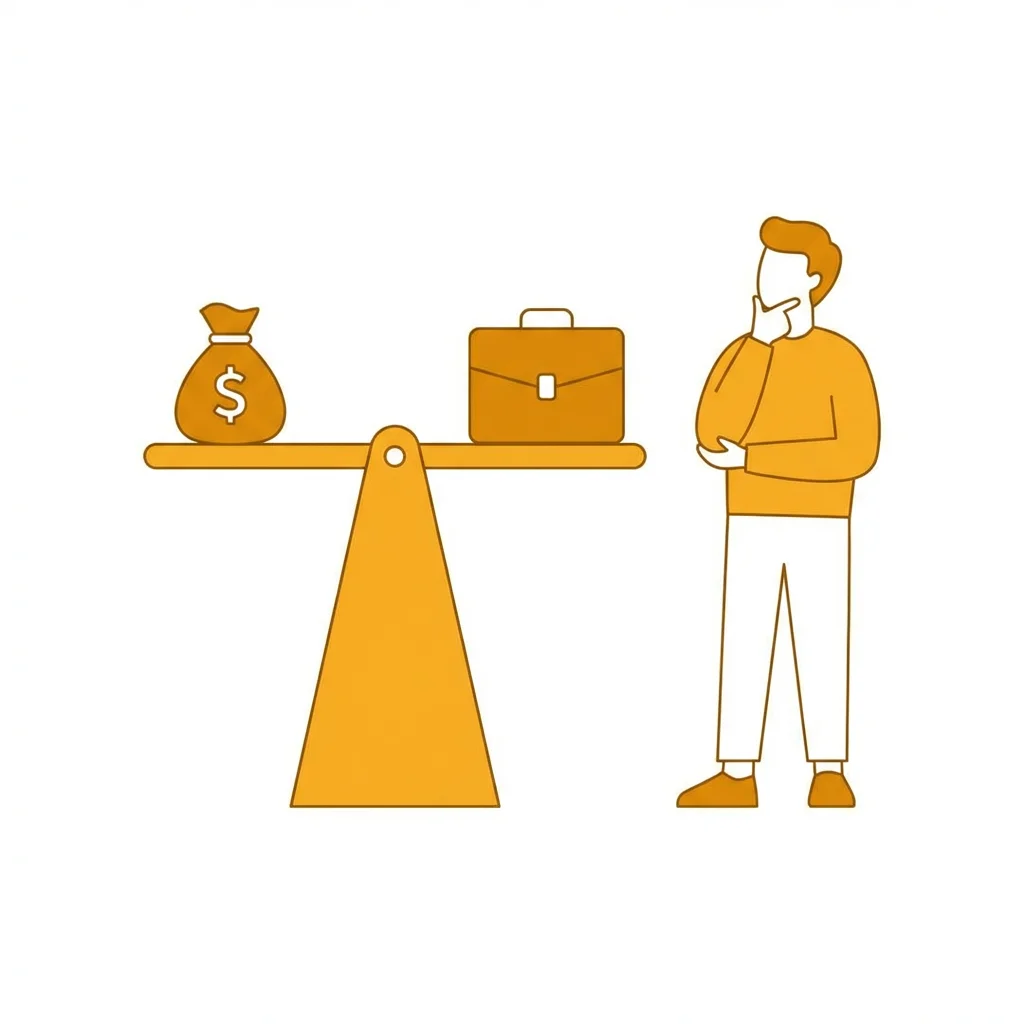
80% of people who accept a counter-offer are gone within 18 months. Usually not on their own terms.
That number comes from years of recruiter data, and it tracks with what we consistently see: the counter-offer feels like a win in the moment. Your company finally sees your value. They matched the number. You don't have to go through the stress of a new job. You stay.
And then, 14 months later, you're back on the market — except now you're doing it without the momentum of a live offer, and your current employer has quietly been interviewing your replacement since the day you told them you had another offer.
Look, sometimes the counter-offer is the right move. But most people make the decision based on the wrong inputs. Here's the actual calculus.
First: understand why they gave you one
Not to be cynical about it — but companies don't give counter-offers because they suddenly realized they undervalued you. They give them because replacing you is expensive. The average cost to replace an employee is 50–200% of their annual salary when you factor in recruiting fees, onboarding time, lost productivity, and institutional knowledge walking out the door.
A counter-offer is a business decision. It usually costs them less to retain you for 12–18 more months than to replace you now. That's the calculation they're running. You should be running your own.
4 counter-offer situations that almost always end badly
They matched the number but changed nothing else
The reason you started looking wasn't the salary. It was the manager, the lack of growth, the toxic culture. A 10% bump doesn't fix any of that. You'll be back on the market in six months — but now you've burned your goodwill.
They needed time to "check with leadership"
If they had to escalate a pay decision that should have already been happening, you were already undervalued for months. The question is: why did it take a competing offer to trigger this conversation?
The counter came with conditions or a guilt trip
"We really need you right now" / "Think about the team" / "After everything we've done for you" — these are not compelling business arguments. They're emotional leverage. A company that respects you doesn't negotiate by making you feel bad.
Your manager now knows you were looking
This changes things whether you take the counter or not. You're now the person who almost left. Some managers are fine with it. Most quietly start planning your replacement.
The question nobody asks: why were you underpaid in the first place?
Honestly? This is the most important one. If your company now has the budget to pay you 15% more — they had that budget six months ago. They just didn't use it.
What changed? You got an outside offer. That's the only thing that moved the needle. Which tells you something: the only leverage you have at this company is the willingness to leave. And once you've used that card and stayed, you've shown them your limit. You're not going anywhere.
Real talk: If your company needs a competing offer to pay you market rate, ask yourself — are you going to get another outside offer every 18 months just to keep up? Because that's the alternative. And that's exhausting.
The actual decision framework
Stop trying to decide based on the numbers alone. Run through these two lists.
Consider taking the counter if:
- You genuinely like your job and team — the offer was purely exploratory
- The counter addresses the root problem (not just salary)
- You're mid-project and leaving now would genuinely harm your professional reputation
- The new company has real red flags you ignored during the honeymoon phase of interviewing
- The counter includes a title change, expanded scope, or structural promotion — not just a raise
Walk away if:
- You've had "we should revisit your comp" conversations before — and nothing happened
- The new role has significantly more growth trajectory
- Your relationship with your manager has been eroding for more than 6 months
- The counter is exactly what you asked for — no more, no less (they're doing the minimum)
- Your gut reaction to the counter was "finally" instead of "wait, do I even want this?"
If you walk: how to decline without burning it down
Declining a counter-offer is awkward. It shouldn't be — you're not doing anything wrong — but it always feels a little like breaking up with someone who just bought you flowers.
Script to use
"I genuinely appreciate this, and I want you to know it wasn't an easy decision. This role is a really specific opportunity to [grow into X / work on Y] that I feel I should take. I'm committed to making the next [transition timeline] as smooth as possible — happy to help document everything and support whoever takes this over."
Short, warm, professional. No over-explaining. The more you justify, the more you invite a counter to the counter. Say it once, mean it, and move forward.
One pattern we keep seeing: candidates who take counter-offers and then come back to us 12 months later often say the same thing — the money was better, but something subtle shifted with their manager. They stopped getting the interesting projects. They weren't considered for the next promotion cycle. They were never explicitly punished, but they also weren't quite trusted the same way. It's death by a thousand paper cuts.
The best time to think about counter-offers is before you get one — which means keeping your market options warm even when you're not actively looking. We built Career Capybara partly for this: keeping your resume and applications sharp so that when you do get an offer (and eventually, you will), you're negotiating from a place of genuine choice, not desperation.
If you want to try it, it's free to start — no credit card, no pitch call. careercapybara.com/signup.
The offer is leverage. Don't give it up for free.
Whether you take the counter or walk, make sure the decision is yours — not the path of least resistance.