The cover letter that actually gets read goes through the job description line by line.
The traditional cover letter is three paragraphs of enthusiasm and a summary of your resume. Nobody asked for either of those things.
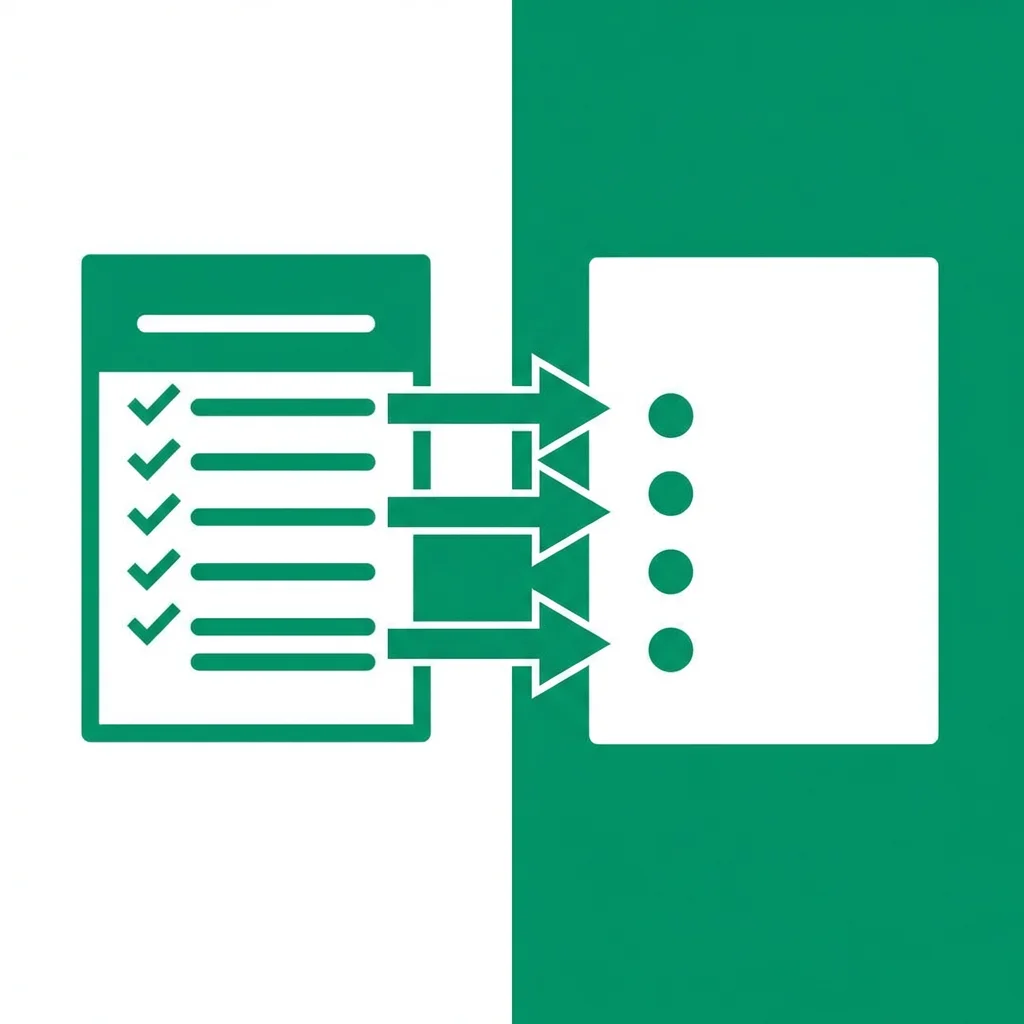
What the hiring manager actually wrote down — in the job description — is a list of requirements. They need someone who can do specific things. The cover letter's one job is to show that you can do those specific things, using evidence, not adjectives.
The qualification cover letter doesn't replace traditional format with a gimmick. It replaces it with something more useful: a direct, requirement-by-requirement response that makes it trivially easy for the reader to confirm you're qualified.
What the standard cover letter actually says
Here are three sentences from real cover letters. Combined, they represent about 80% of what most cover letters contain:
""I am excited to apply for the [Role] position at [Company]. I believe my background in [Field] makes me an excellent candidate for this opportunity.""
""Throughout my career, I have developed strong skills in [Vague Skill], [Vague Skill], and [Vague Skill].""
""I am a results-driven professional who thrives in fast-paced environments and is passionate about [Generic Topic].""
Nothing in those sentences tells the reader anything they couldn't infer from the fact that you applied. "Excited to apply" is not information. "Strong skills" is not a credential. This is content that takes up space without earning it.
The qualification format — structure, examples, and why each part works
The format has three parts. Total length: 250–400 words. Not more.
Opening (2 sentences maximum)
Instruction
State the role and one specific reason this company — not just "excited about the opportunity."
Example
"I'm applying for the Senior Product Manager role. I've been following your API platform's shift toward developer-led growth for the past year, and I think I have a specific perspective on what the next 18 months of expansion looks like."
Why it works
It proves you've done research and sets up the rest of the letter as a substantive business conversation, not a pitch.
The qualification table
Instruction
Pull 4–6 requirements directly from the job description. For each one, write 1–2 sentences of evidence from your background.
Example
"You're looking for someone who has: Managed a 0-to-1 product from concept to launch → I led the full lifecycle of [Product] at [Company], from user research through GA — 14 months, 3 engineers, shipped with a 73 NPS at launch. Experience working closely with enterprise sales → At [Company], I embedded directly with the AE team for Q4 2023, which led to 3 features that directly accelerated 4 deals totaling $1.1M. A track record of cross-functional stakeholder management → I've run weekly product reviews with C-suite stakeholders for 2 years, including presenting roadmap tradeoffs to the board twice."
Why it works
This format makes you scannable and immediately relevant. The hiring manager doesn't have to work to connect your background to their requirements — you've done it for them.
The close (2–3 sentences)
Instruction
Acknowledge one challenge or question you anticipate, then invite the conversation.
Example
"I'm aware the background you're looking for leans more heavily toward B2B than my current mix — I'm happy to walk through how I'd approach that transition if it's useful. Looking forward to the conversation."
Why it works
Pre-empting an obvious concern reads as self-aware and confident, not defensive. It also makes the next conversation easier because you've named the elephant.
When this format works best — and when to skip the cover letter entirely
The qualification format is highest-value when: the role has a detailed job description with specific requirements, you have clear experience that maps to those requirements, and there's a mismatch you want to pre-empt (career change, industry shift, non-linear path).
Skip the cover letter entirely when: the application system makes it optional and you have a strong referral, the role is highly technical and the resume speaks for itself, or you're applying to a company that explicitly says they don't read them (some startups are transparent about this).
Write the qualification letter
When: Career change, unexplained gap, non-target background, or highly competitive senior role
Write a standard letter (but shorter)
When: Straightforward match, active referral, strong brand-name background
Skip it
When: Application explicitly says optional, startup with stated "no cover letter" culture, technical roles where portfolio speaks
We've seen this pattern repeatedly: candidates who write qualification-format letters for roles where they're not an obvious match on paper get interviews at a meaningfully higher rate than those who write traditional letters — or no letter at all. The reason is simple: they've removed the reader's work. The hiring manager doesn't have to mentally map the candidate's background to the role. It's already done, in the same document, in the same order the requirements were listed.
Career Capybara can help you generate qualification-format cover letters automatically — pulling from the JD, matching to your resume, and drafting the table in under a minute. Try it free.
Stop writing letters about yourself. Start responding to what they asked for.
The job description is a checklist. The qualification letter checks every box.