Being the "go-to person" at work feels like a win. It's often a trap.
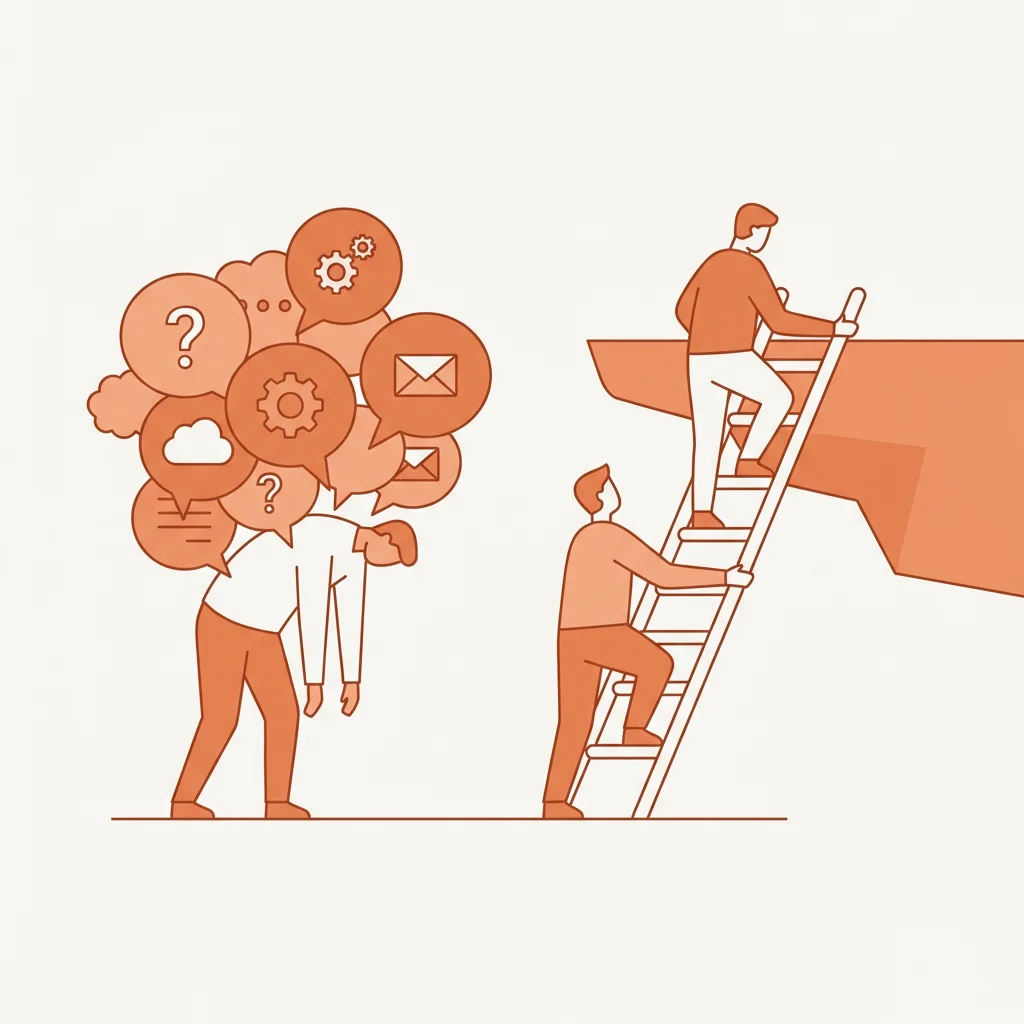
Everyone knows who to ask. They all come to you. Your manager brags about how reliable you are. It feels like the definition of being valued.
Then review season comes. Your peer — who asks more questions than you and makes more mistakes than you — gets the promotion. You get "you're doing great, keep it up."
Here's what happened: you became too valuable to move. Indispensable at your current level is not the same as ready for the next one. In fact, the more essential you are to the daily operations of your current role, the harder it is for your manager to see you in a bigger one — and the more it costs them to promote you out of your current seat.
The go-to person trap is real, it's common, and it's worth understanding before it costs you another review cycle.
4 signs you're in the trap
You're always the one people ask — and you always say yes
You've trained your team to route through you. Every ask you fulfill reinforces the pattern. The bottleneck is now a feature of how the team operates. Removing yourself later becomes actively disruptive.
You know things nobody else knows
Institutional knowledge that lives only in your head is a liability disguised as value. Your manager doesn't want to promote you because promoting you creates a gap they can't fill. You're not indispensable — you're a single point of failure.
Your manager praises how reliable you are
"Reliable" is not "ready for the next level." Reliability at your current scope is table stakes. If the feedback is always about execution and never about leadership or strategic thinking, you're being optimized for where you are — not for where you want to go.
You're the first person pulled into every fire
Being in every fire means you're the fixer, not the strategist. Fixers don't get promoted — they get more fires. The people who advance are the ones who build systems that prevent fires, then hand the system documentation to someone else.
What "indispensable" actually looks like at the next level
The mistake is thinking the solution is to be less helpful. It isn't. Senior people are deeply helpful — just in a different direction.
Current-level indispensable
- You are the answer
- Things break when you're out
- Known for execution speed
- People route through you
- You hold the knowledge
Next-level indispensable
- You built the system that answers
- Things run when you're out
- Known for judgment and direction
- People route through your docs
- The team holds the knowledge
The shift isn't from helpful to unhelpful. It's from being the resource to building the resource. Senior people make teams better — not by answering more questions, but by reducing the number of questions that need to be asked.
How to get out of the trap without creating chaos
The goal isn't to stop being helpful overnight. It's to gradually shift the source of your helpfulness — from you as a person to systems and knowledge you've built. This takes 60–90 days to do properly.
Document everything you know
Start with the things that only exist in your head. Write them down — not in a frantic "bus factor" doc, but as genuinely useful reference material. SOPs, decision logs, runbooks, FAQ docs. This does two things: it frees you from being the answer, and it demonstrates senior-level behavior (systems thinking, knowledge transfer) that reads as operating above your level.
Teach someone else to do the thing you're known for
Pick one recurring request you're the default for and train a peer or junior to handle it. "Hey, I've been handling X — would it be useful for you to take this on? I can walk you through it." The goal isn't to offload work. It's to expand the team's capability — which is literally what senior people do.
Shift from answering to directing
When someone comes to you with a question you've answered 10 times: instead of answering, point them to the doc, the resource, or the person who can answer it. "Great question — I actually wrote this up last month, here's the link." You're still helpful. You're just not the bottleneck anymore.
Redirect your energy to next-level work
The time you recover by deprogramming the "come to me" habit should go into things that are visibly senior: cross-functional projects, presenting to leadership, strategic proposals, mentoring junior team members. You need your manager to see you in the new scope, not just hear that you're working on it.
Have the direct conversation
"I've been thinking about the next step in my career, and I want to make sure I'm developing the right things. I've realized I've been very focused on [current specialty] — is there a way to take on more [strategic/leadership/cross-functional] work while I build toward [next level]?"
We've seen this play out across dozens of coaching conversations: the person who escapes the trap fastest is usually the one who names it out loud. They tell their manager: "I've realized I've been the bottleneck on a lot of things that shouldn't require me. I'm spending the next quarter fixing that — writing things down, training the team, and carving out time for bigger projects." That conversation, done well, is itself evidence of senior thinking. You don't just fix the trap — you demonstrate the judgment to recognize it.
And if the trap is too baked in to escape internally? Sometimes the cleanest path to the next level is a new company that meets you at the level you've been operating at — not the one you've been slotted into. Career Capybara can help you figure out what that looks like. Try it free.
Stop being the answer. Start building the system.
The fastest path to the next level is making yourself replaceable at the current one.