One page or two? The resume length debate has a cleaner answer than you think.
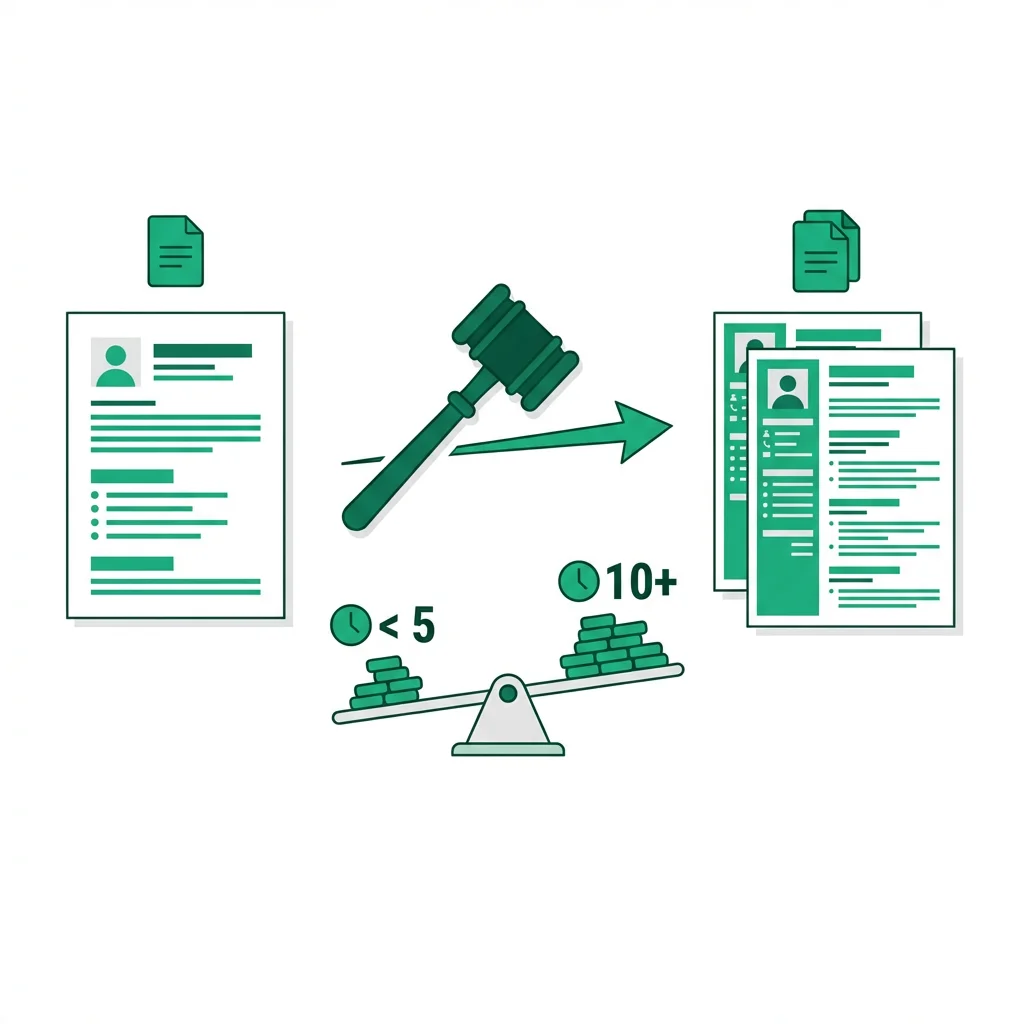
The one-page rule is one of the most confidently stated pieces of career advice — and one of the most context-dependent.
For some candidates, a two-page resume is the right call. For others, insisting on two pages is actively hurting them. The real answer depends on three things: years of relevant experience, seniority of the target role, and whether there's genuinely more to say.
Here's how to figure out which camp you're in — and a practical editing test if you're genuinely not sure.
Use one page if any of these are true
Under 7 years of experience
You simply don't have enough relevant history to fill two pages without padding. Padding is worse than brevity.
Recent grads and early-career candidates
A two-page resume from someone 2 years out reads as inflated. Tight and compelling beats comprehensive.
Career changers
Your older experience in a different field mostly doesn't transfer. One focused page on what's relevant is more compelling than two pages of mixed signals.
Roles in startups or fast-moving companies
Hiring managers at high-growth companies often flag two-page resumes from mid-career candidates as a sign of poor editing instincts.
Two pages is right if all of these are true
Note the "all of these" — not just one. Two pages is justified by the combination of experience depth, role seniority, and actual content that can't be cut without losing something meaningful.
10+ years of directly relevant experience
Compressing a decade of substantial work into one page means cutting things that a hiring manager in your field would want to see.
Senior / executive roles
At the VP and above level, the hiring process is more thorough. Decision-makers read more carefully, and the context of your full career matters.
Technical roles with required credentials
If the job description has 15 technical requirements and you need to demonstrate coverage, you need the space. This applies especially to engineering, data science, and clinical roles.
Academic or research roles
CVs (not resumes) for academic roles have entirely different conventions — length is expected and appropriate.
The real problem isn't length — it's filler
Most "should I use two pages" questions are really "I have filler I'm not sure whether to cut." Filler includes: responsibilities-based bullets that don't show impact, roles from 12 years ago described in full detail, a skills section with 40 items, and a summary paragraph that restates what the experience section already shows.
Cut the filler. Then reassess the length question. The answer is usually obvious once the padding is gone.
The 1.5-page failure mode: The worst resume length is one that spills awkwardly onto a partial second page. If you can't fill page 2 at least 75%, either expand (add substance, not filler) or cut back to one page. A resume that ends at the middle of page 2 reads as unfinished.
The 5-question editing test
Still not sure? Run through these. Each "yes" answer means there's room to cut.
Does page 2 start with experience from more than 10 years ago?
→ Probably cut. Condense older roles to title + company + dates only.
Are any bullets describing responsibilities rather than outcomes?
→ Rewrite as outcomes. You'll likely cut 20% of length in the process.
Does your resume have a professional summary AND an objective statement?
→ One or neither. Never both.
Is page 2 less than half full?
→ Either add substance or move to one page. A resume that's 1.2 pages is a formatting failure, not a strategic choice.
Could any two bullets be combined without losing anything?
→ Combine them. Specificity beats volume.
The actual principle behind all of this
Length is not the goal. Signal density is. A one-page resume that's dense with relevant, quantified, specific experience is better than a two-page resume with the same content padded to fill the space.
Every line on your resume should earn its place by telling a recruiter something they couldn't infer from the previous line. If it doesn't — cut it, regardless of what page you're on.
In our experience reviewing hundreds of resumes: the candidates who obsess over page count are almost always missing a more important edit. The ones who obsess over content — does this bullet tell a recruiter something real about what I can do? — end up at the right length naturally. The structure follows from the content, not the other way around.
Career Capybara helps you tailor and trim your resume so every line is working for you — not just filling space. Try it free.
The right length is the one where every line earns its place.
Not one page. Not two pages. The right number of pages for what you actually have to say.