Three interviewers. One seat. Here's exactly how to manage a panel interview.
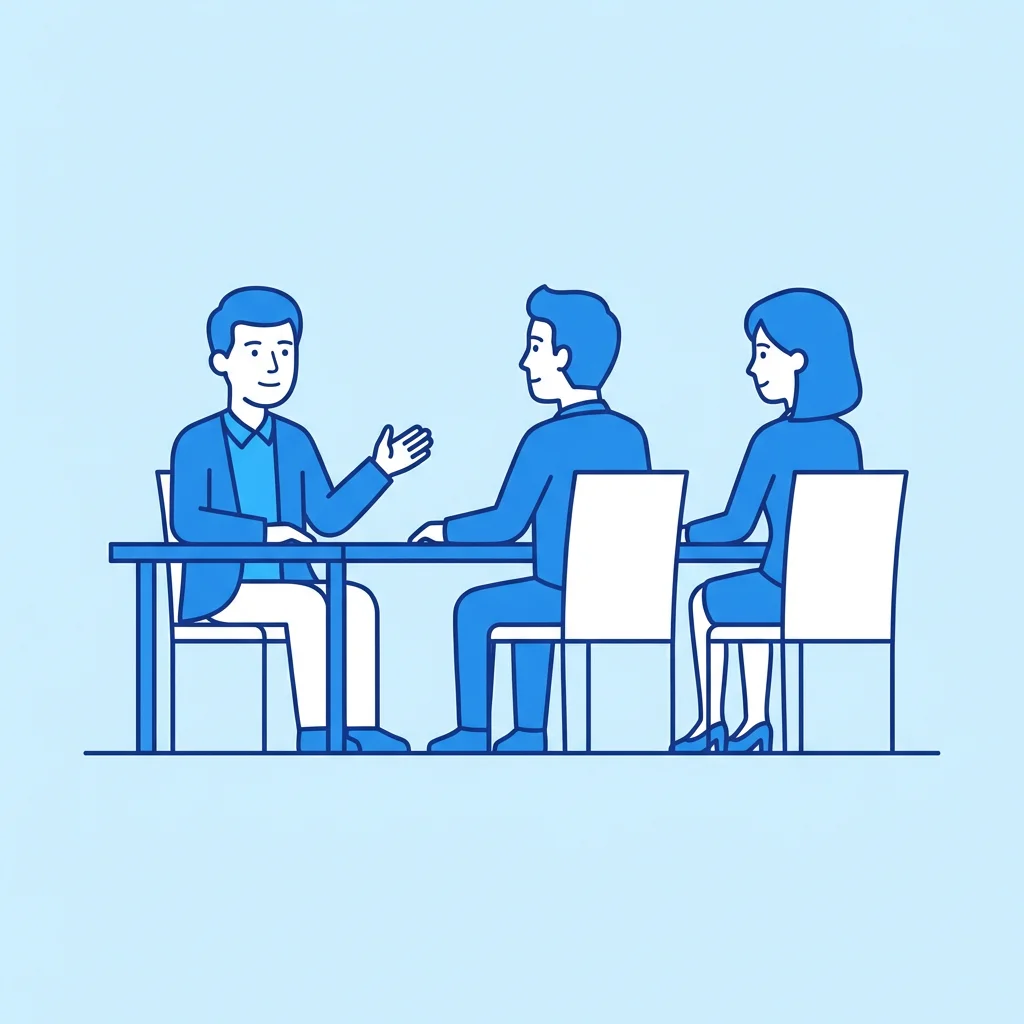
A panel interview is a 1:1 interview with extra complexity — not a fundamentally different thing. Most candidates don't have a system for managing it, so it feels harder than it actually is.
The good news: the underlying skills are the same. You still need to tell specific stories, show self-awareness, and demonstrate that you're excited about the role. You just need to do it for three audiences simultaneously — which requires a small set of tactical adjustments.
Here's the full system: why panels feel harder, five specific tactics that change the dynamic, and the closing move that gives you an edge in the debrief.
Why panel interviews feel harder than they are
You're performing for multiple audiences with different priorities simultaneously
You can't easily read the room when 3 people are giving you different cues
There's often a skeptic in the group whose nonverbal signals can throw you off mid-answer
It's harder to build rapport when no single relationship deepens over the course of the conversation
None of these are insurmountable — they just require a different operating model than the one-on-one interview. The five tactics below address each one directly.
Before you walk in: 3 things to do in advance
Research every panelist on LinkedIn
Know their title, how long they've been at the company, their background, and whether they have any public writing or talks you can reference. In a panel, you have multiple relationships to build — and knowing something specific about each person gives you material.
Understand each person's stake in this hire
The hiring manager cares if you can do the job. Engineering cares if you'll make their lives easier or harder. HR cares about culture fit and process. Tailor how you present your experience to speak to each person's actual concern.
Prepare a question for each person specifically
"For [Name] in particular — given your background in [X], I'd love your perspective on..." This works even if you don't end up asking it — the prep changes how you engage with each person when they talk.
5 tactics that change the dynamic in the room
Make eye contact with everyone — but close with the decision-maker
When answering any question, start by briefly acknowledging the person who asked, then expand your gaze to include the full group as you deliver the core of the answer, then return to the asker to close. It reads as confident and inclusive without ignoring anyone. The exception: for high-stakes points or your most important answers, close by making sustained eye contact with the most senior person in the room — usually the hiring manager or department head.
Direct different parts of your answer to different people based on relevance
If there's an engineer, a PM, and an HR rep in the room, tailor sections of your answer to each. "From a technical standpoint — [to the engineer] — the key decision was X. From a process perspective — [to the PM] — we structured it by doing Y. And the team dynamics aspect — [to HR] — was something I thought about this way..." This makes everyone feel heard and signals EQ.
Identify the skeptic early — and don't avoid them
There's almost always one person in a panel who's less warm than the others — arms crossed, shorter answers, harder follow-up questions. Most candidates instinctively give this person less attention. Do the opposite. The skeptic is often the person with the most weight in the debrief. Engage them, ask them a direct question, address their concerns head-on. Converting a skeptic matters more than reinforcing enthusiasm in someone already on your side.
Take notes — it signals you're taking everyone seriously
Bring a notepad. Write down the names of the panelists when they introduce themselves (you will use them). Note any specific concerns or interests that surface so you can reference them later. When you take notes in a panel, you signal that you're treating this as a professional conversation, not a performance. It also buys you a 3-second pause to think before answering.
Ask questions that invite multiple perspectives
"I'd love to hear from each of you — what does success look like in this role from your particular vantage point?" or "What's one thing each of you thinks this person will need to get right in the first 90 days?" These questions give each panelist a moment, signal genuine interest in their specific perspective, and often produce the most useful intelligence you'll get in the interview.
The closing move that sets you apart in the debrief
Most candidates close a panel with "thank you for your time." The candidates who stand out use the last 3 minutes to surface any remaining reservations and demonstrate self-awareness one more time. Pick one of these:
""Before we wrap up — is there anything about my background that you're uncertain about or would want me to address? I'd rather handle it now than leave anything open.""
""I want to make sure I've been useful to everyone in the room — is there anyone who has a question I didn't fully answer that I can take another pass at?""
""This has been one of the more substantive conversations I've had in this process — I feel like I have a much clearer picture of what you're looking for. What are the next steps from here?""
One pattern that comes up repeatedly in debrief conversations we've heard about: the candidate who "worked the room" — who made everyone in the panel feel seen and addressed — is almost always remembered more positively than the candidate who gave better answers to a subset of the group. In a panel, social intelligence signals are amplified. The person who ignores the quieter panelist, who only addresses the most senior person, who misses the skeptic's body language — these are all noticed. The person who navigates all three simultaneously stands out immediately.
Career Capybara's interview prep helps you get ready for the full range of interview formats — not just the one-on-one. Try it free.
Three people, one decision. Make all three feel heard.
The system is learnable. The tactics are simple. The results are consistent.