Your performance review has almost nothing to do with your performance
The rating you receive in December was shaped in September. Probably earlier.
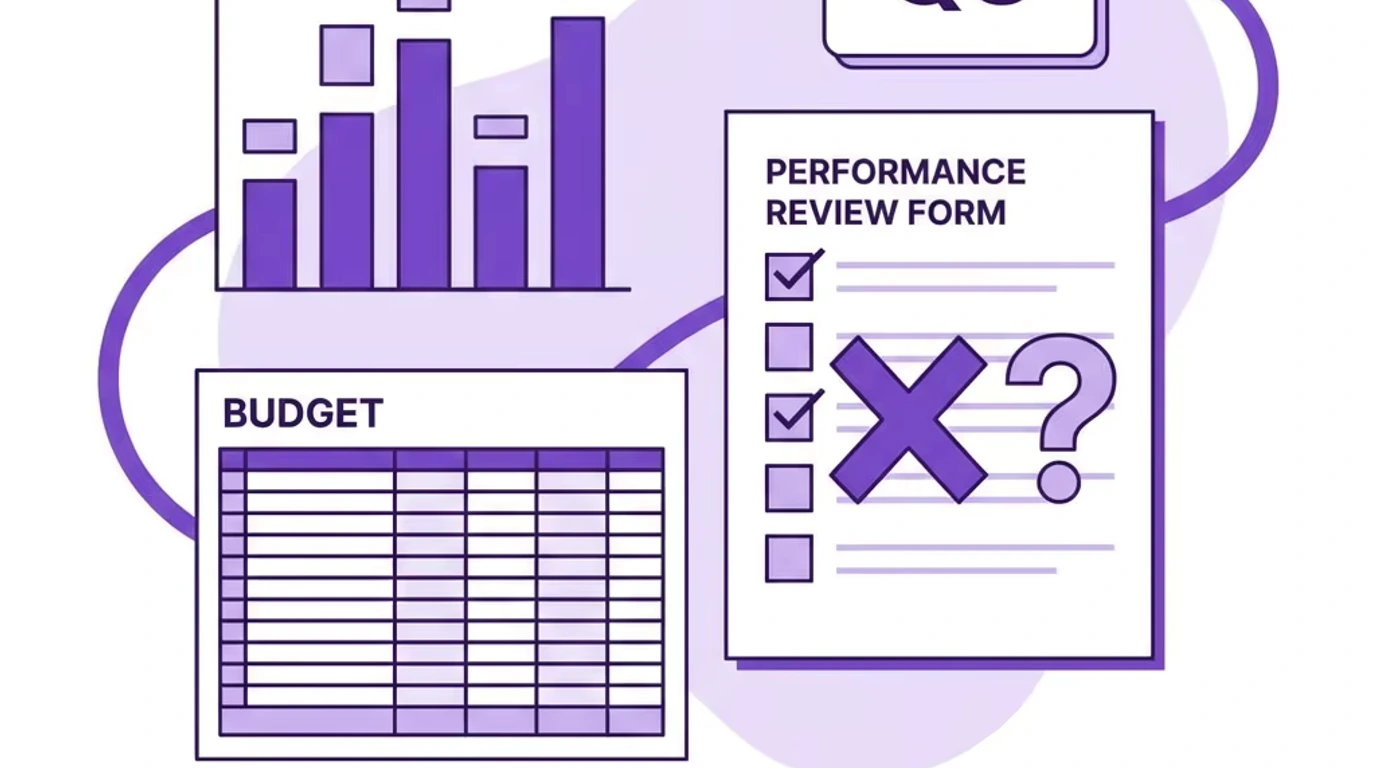
Performance reviews feel like evaluations. They're actually more like budget allocation ceremonies with a narrative attached. The numbers were largely decided before you wrote your self-review, before the feedback forms were sent out, before anyone asked you a single question.
This isn't cynicism — it's how the system actually works. And once you understand it, you can work with it instead of being surprised by it every December.
What actually drives your rating (and it's not the rubric)
The budget was already allocated before your review
Most companies finalize salary increase pools before performance reviews happen. The review is how they justify a number that's already been decided — not how they calculate it. If the company had a bad quarter, the merit pool shrinks regardless of how you performed.
Your manager's calibration conversation matters more than your self-review
In most organizations, managers meet as a group to "calibrate" ratings before the official process concludes. In that room, your rating is influenced by how well your manager can articulate your impact — and how much political capital they're willing to spend on you. A manager who is disengaged, new, or conflict-averse will not fight for you.
Recency bias is real and systematic
Managers remember the last 90 days more than the previous 9 months. One bad sprint in October can overshadow 9 months of strong work. One visible win in November, delivered at the right moment, can have an outsized effect on the rating.
The written record is what gets cited in the room
When your manager is advocating for you in a calibration meeting, they're pulling from what they have in front of them: your self-review, email threads, project completions, and any notes they took. Managers who didn't take notes will default to impressions. You want to give them material.
The calibration room: what happens when you're not there
Here's the process most employees don't know exists: before your review is finalized, your manager sits in a room (or a Zoom) with other managers. They go through the team's proposed ratings together. The goal is consistency across the organization.
In practice, what this means: your manager has to justify your rating out loud to peers. If they say "I think Marcus deserves a 4," another manager might push back — "we only have budget for two 4s in this group, who else are you considering?" Your manager then has to choose who to advocate for and how hard.
The implication: your review outcome depends on how well your manager knows your work, how willing they are to fight for you, and how much political capital they have in that room. A disengaged manager with a poor relationship with their peers is a structural disadvantage — regardless of how well you performed.
The year-long playbook: influence it before it happens
You can't control the budget. You can't control the calibration politics. But you can control the record — and the record is what your manager uses to fight for you.
Q1–Q2: Build the record
Send a weekly or biweekly "status note" to your manager — 3 bullets, what you finished, what's next, any blockers
When you complete something significant, send a brief "project wrap" email summarizing the outcome and what it means for the team
Track your wins in a running doc. Date, what you did, what happened as a result, quantified if possible
Q3: Have the "early alignment" conversation
Ask your manager directly: "What does a strong rating look like for someone at my level this cycle? I want to make sure I'm focused on the right things."
This surfaces their mental model before the window closes — not after
If they mention something you haven't done, you now have time to do it
Q4: The visible finish
Time one significant delivery to land in October or November — something visible, something that comes with a clear outcome
Send your manager a brief "year in review" note 2–3 weeks before reviews close: 5 bullets of your biggest contributions this year, with numbers
This becomes their ammunition in the calibration room
Review week: The conversation itself
Do not wait to be told your rating. Ask: "What feedback do you have from the calibration process?"
If the rating is lower than expected, ask: "What would I need to have done differently to achieve a higher rating? I want to understand the gap so I can close it next cycle."
Write down what they say. This is your playbook for next year — and if nothing changes, your evidence for a conversation about external options.
If the rating is still lower than you expected
First: don't react in the meeting. Ask clarifying questions, take notes, and say "I appreciate the feedback — I want to sit with it and follow up." Then do two things.
One: write down everything your manager said in that conversation. The specific gaps they mentioned. The things they said you'd need to do differently. This is your evidence in 6 months if nothing changes.
Two: quietly start the market test. You don't have to leave. But knowing what external options look like gives you information — and information is the only thing that turns a frustrating review into a negotiating position.
We see this pattern often: an employee gets a surprising low rating, has a productive follow-up conversation, is told "next year will be different" — and then it isn't. The employees who handle this well usually did one thing differently: they had a live external option by the time next year's review came around. Not because they wanted to leave, but because real alternatives change the tone of every conversation.
Career Capybara helps you stay market-ready without turning job searching into a second job. Try it free — careercapybara.com/signup.
The review is the ceremony. The outcome was decided earlier.
Start building your record now — not in December when it's already too late.