Recruiters read your resume top to bottom. Most people put the worst stuff first.
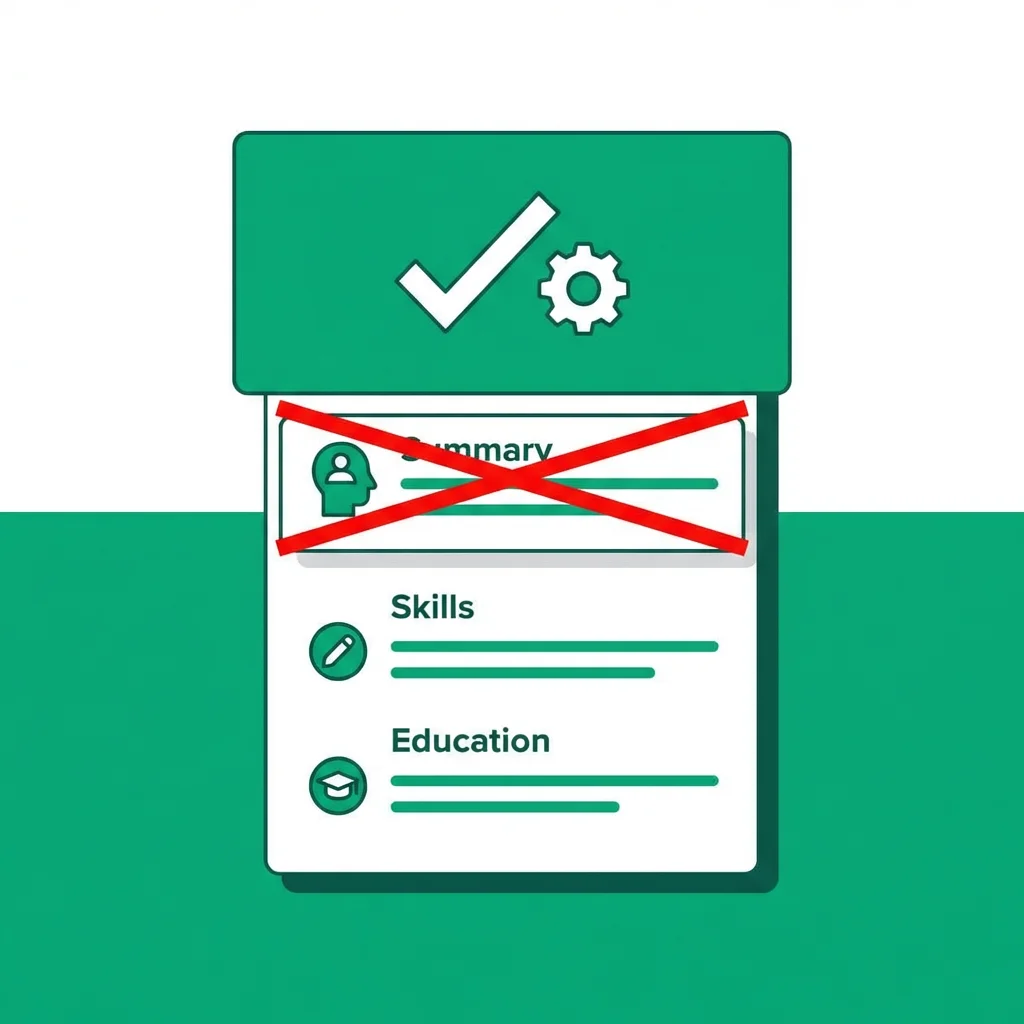
A recruiter spends 6–10 seconds deciding whether to keep reading your resume. Whatever is at the top of the page is what gets evaluated in that window.
Most resumes open with a Professional Summary, a Skills section, or an Objective statement. These are the three sections recruiters reliably skip. By the time they get to your actual experience — the only part that matters — they've already formed an impression. Usually not a good one.
The fix is not rewriting your resume. It's reordering it. Here's the hierarchy that matches how hiring decisions actually get made.
The 3 sections people lead with — and why they backfire
Professional Summary
Generic paragraph you wrote about yourself, for yourself. The recruiter already has your resume — they don't need you to summarize it.
Skills / Technical Skills
A keyword dump that reads like a LinkedIn tag cloud. "Proficient in Microsoft Office" tells them nothing. The work experience would show this.
Objective Statement
"I am seeking a challenging role where I can leverage my skills..." Nobody has ever gotten a job because of an objective statement.
Honestly? These sections exist because resume templates include them, and most people fill in whatever a template provides. But the template was designed to look complete — not to reflect how recruiters actually scan documents.
The order that actually works — and why
Experience
What you've actually done is the only thing that matters. Put it first. Every role in reverse chronological order, most recent at the top.
The rule
If your most recent job is at a recognizable company or carries a strong title, it should be visible within the first 3 inches of the page.
Education (if recent or highly relevant)
Recent grad? Education goes up top. 5+ years of experience? It drops to the bottom. The question is always: what's more impressive, my work or my degree?
The rule
If you graduated more than 5 years ago, your education section should be 3 lines maximum and positioned at the bottom.
Skills / Certifications
Only after they've seen your experience. By then, a skills section is confirmation, not introduction. List tools and certifications that are genuinely searchable — not soft skills.
The rule
No "Communication," "Teamwork," or "Problem Solving." Every recruiter has seen this. It adds noise.
Summary (optional, and only if it adds something new)
If you're making a career pivot or your job titles don't reflect your actual scope, a 2-line summary can provide context. Otherwise, skip it.
The rule
Two sentences maximum. First: what you do. Second: the one number or credential that anchors it.
The 5-year rule: what to cut, what to keep
Inside your Experience section, another hierarchy applies: recency. Hiring managers care about what you've done in the last 5 years. Anything older than that gets progressively less weight — unless it's directly relevant to the role.
4–6 bullet points per role, full detail, quantified outcomes
3–4 bullets, focus on impact and scope, trim the tactical detail
2–3 bullets max, title and company matter more than the detail
Title, company, dates only — or cut entirely if the role isn't foundational
The goal isn't to hide experience — it's to match the depth of detail to the weight the recruiter gives each period. An eight-bullet breakdown of a role you held 12 years ago is not impressive. It's noise.
The "first 3 inches" test
Print your resume. Cover everything below the 3-inch mark from the top of the page with your hand. What's visible should be enough to make a recruiter want to keep reading.
If what's visible is a summary paragraph and a list of software tools — you've failed the test. If what's visible is your most recent title, company, dates, and the first two or three bullets of your most relevant role — you're in good shape.
We see this consistently: candidates who rearrange their resume so that their most recent experience leads — no preamble, no skills section, straight into the work — report meaningfully better response rates. Not because they changed the content. Because they changed what the recruiter sees first. The content was already strong. It was just buried.
Career Capybara helps you tailor your resume section by section for each role — including getting the structure right before you start customizing the content. Try it free.
The best content in the wrong order still loses.
Fix the structure first. Then optimize the bullets.