Comparison
Why a job search spreadsheet eventually breaks down.
Spreadsheets are good at counting applications. They are much worse at keeping job details, linked resume versions, and interview review in one place.
When the old approach is enough
Spreadsheets still work when the process is light
When Career Capybara helps more
Career Capybara wins when the process needs to stay operational
Before vs after
What changes when the workflow stays connected.
Before
Spreadsheets
Role context
Usually reduced to a title, a link, and a status column.
Resume linkage
Easy to lose track of which version was actually used.
Interview loop
Interview notes often live in separate docs or nowhere at all.
Execution quality
Good for logging. Weak for keeping the process operational.
After
Career Capybara
Role context
Stores job description, notes, salary details, linked resume, and interview history in the same record.
Resume linkage
Tailored resume versions stay attached to the exact application they support.
Interview loop
Mock sessions and real interview reviews can stay tied to the same opportunity.
Execution quality
Designed for tracking, learning, and follow-up across the whole workflow.
Side by side
Where the workflow starts to diverge.
| Topic | Spreadsheets | Career Capybara |
|---|---|---|
| Role context | Usually reduced to a title, a link, and a status column. | Stores job description, notes, salary details, linked resume, and interview history in the same record. |
| Resume linkage | Easy to lose track of which version was actually used. | Tailored resume versions stay attached to the exact application they support. |
| Interview loop | Interview notes often live in separate docs or nowhere at all. | Mock sessions and real interview reviews can stay tied to the same opportunity. |
| Execution quality | Good for logging. Weak for keeping the process operational. | Designed for tracking, learning, and follow-up across the whole workflow. |
Continuity
Can the role survive multiple steps without its context falling apart?
Traceability
Can you tell which resume, notes, and prep actually belonged to this application?
Execution quality
Does the tool help you move the search forward, or only record what already happened?
Product proof
What the connected workflow looks like in practice.
These product surfaces matter because a comparison only becomes convincing when it points back to the actual workflow a user would get.
The board is only the surface
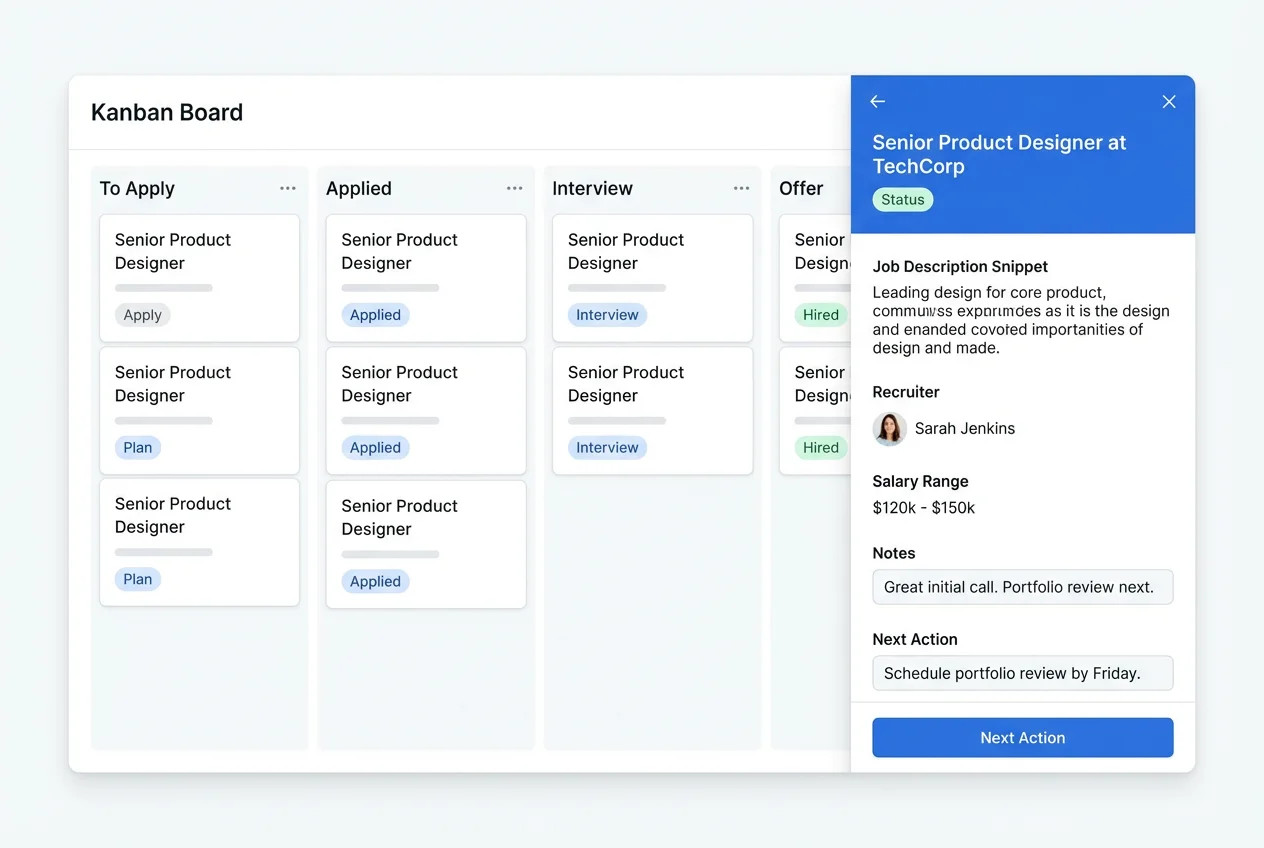
The board is only the surface
The visible stage board is useful, but the stronger value is the detail layer behind each application.
One record can power the rest of the workflow
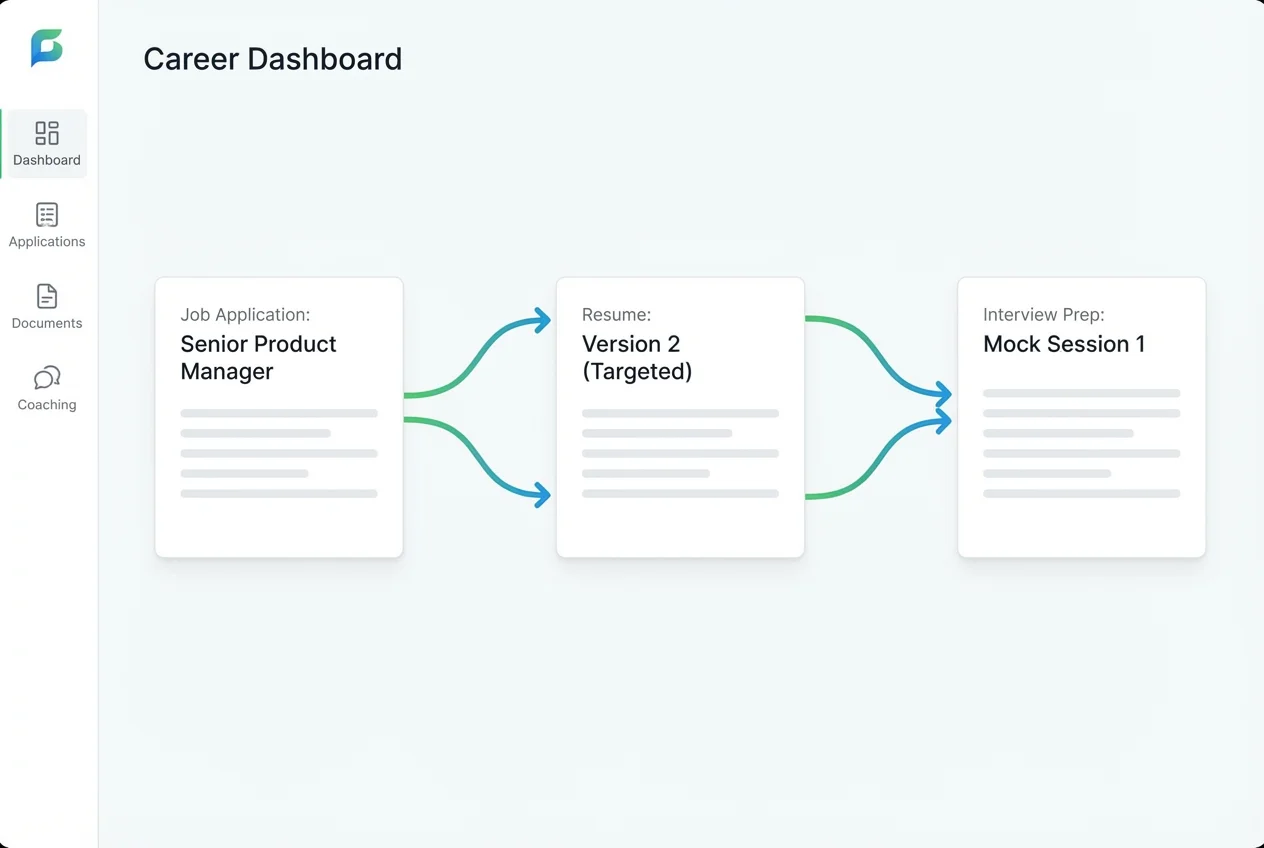
One record can power the rest of the workflow
Once the application exists as a real working record, the resume, extension, and interview surfaces can all stay aligned.
Keep exploring
See the real workflow after the comparison.
Then use Learn Hub, FAQ, and use-case pages to dig deeper.