Comparison
Why a resume builder is not the same thing as a resume workflow.
A builder helps create a document. A workflow helps you keep one source of truth, tailor by role, learn from feedback, and track what actually converts.
When the old approach is enough
Builders still work when speed is the only job
When Career Capybara helps more
Career Capybara wins when resume work has to stay learnable
Before vs after
What changes when the workflow stays connected.
Before
One-off resume builders
Source of truth
Often encourages creating disconnected resume files.
Feedback loop
Feedback often happens outside the product in docs or email threads.
Learning from outcomes
Hard to tell which version helped move a role forward.
Workflow fit
Optimized for making a document quickly.
After
Career Capybara
Source of truth
Keeps one master resume plus role-specific versions tied to applications.
Feedback loop
Shared review links and comments stay tied to the exact version being reviewed.
Learning from outcomes
Resume versions can stay linked to the application they were built for.
Workflow fit
Optimized for building, refining, sharing, exporting, and learning over time.
Side by side
Where the workflow starts to diverge.
| Topic | One-off resume builders | Career Capybara |
|---|---|---|
| Source of truth | Often encourages creating disconnected resume files. | Keeps one master resume plus role-specific versions tied to applications. |
| Feedback loop | Feedback often happens outside the product in docs or email threads. | Shared review links and comments stay tied to the exact version being reviewed. |
| Learning from outcomes | Hard to tell which version helped move a role forward. | Resume versions can stay linked to the application they were built for. |
| Workflow fit | Optimized for making a document quickly. | Optimized for building, refining, sharing, exporting, and learning over time. |
Source of truth
Does the workflow protect your strongest raw material, or does every iteration become a new file?
Review loop
Can comments and revisions stay tied to the exact version being discussed?
Outcome learning
Can you tell which version helped move an opportunity forward?
Product proof
What the connected workflow looks like in practice.
These product surfaces matter because a comparison only becomes convincing when it points back to the actual workflow a user would get.
One master resume with cleaner branching
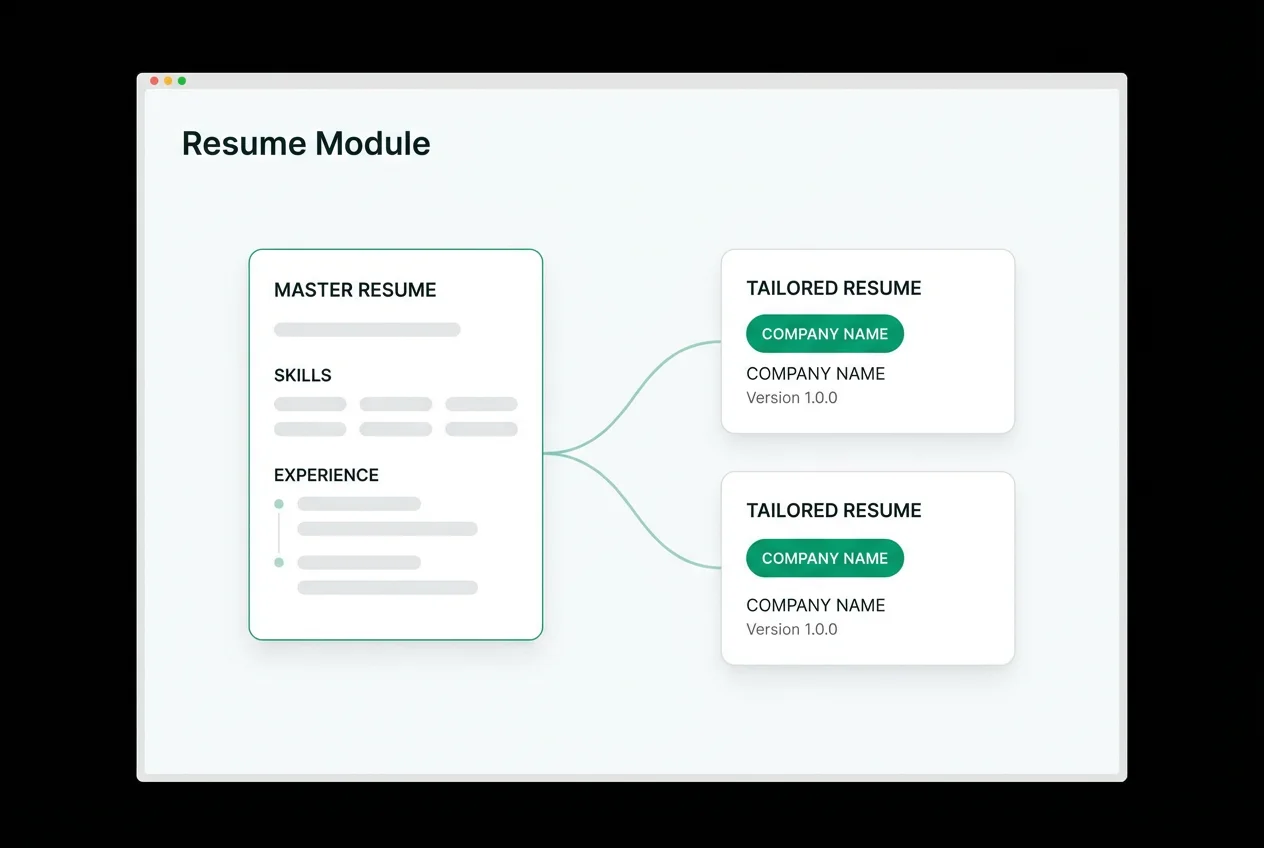
One master resume with cleaner branching
The strongest setup is not endless overwriting. It is keeping a stable source of truth and branching with intention.
Review and export happen in the same flow
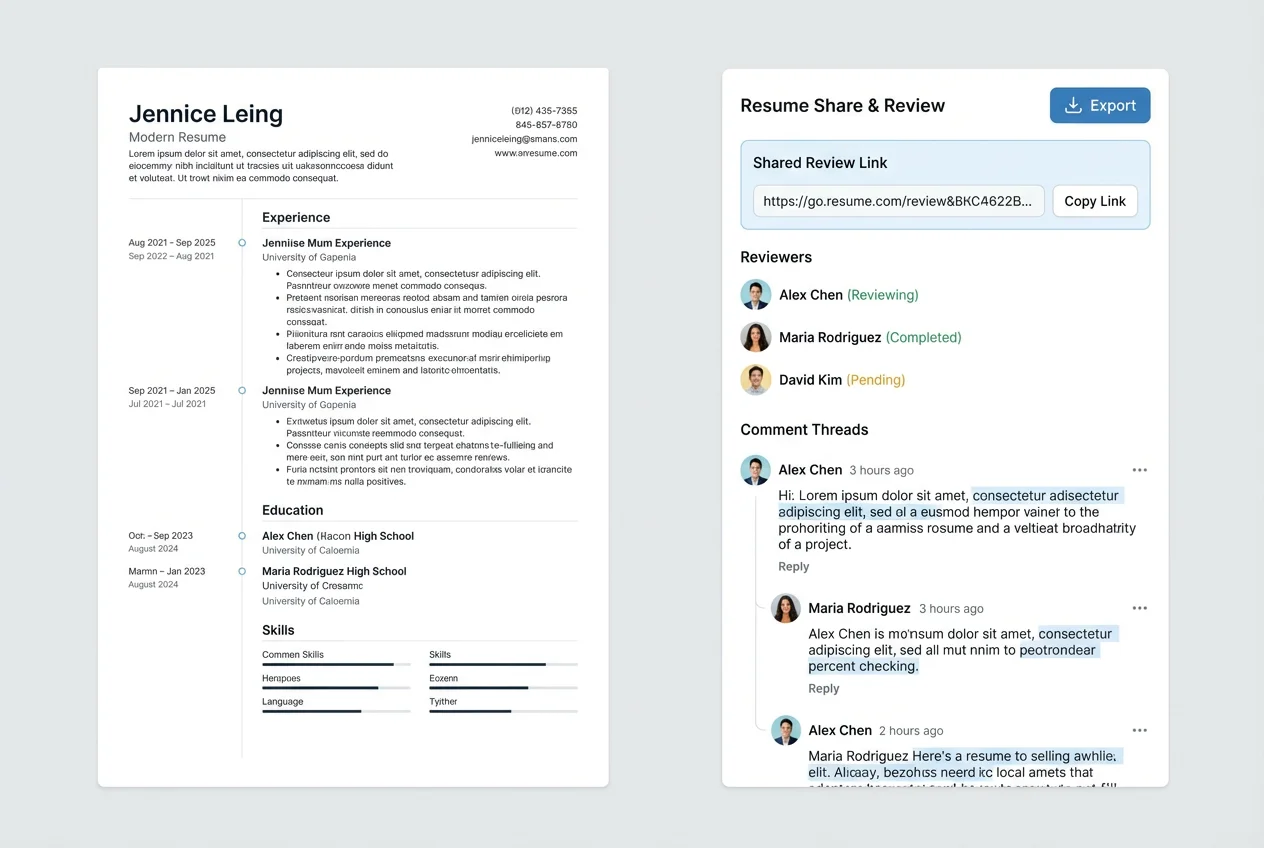
Review and export happen in the same flow
Once editing, review, and export stay close together, the system becomes easier to trust and easier to iterate on.
Keep exploring
See the real workflow after the comparison.
Then use Learn Hub, FAQ, and use-case pages to dig deeper.