What you'll learn
- Interview readiness is a system: context + structure + measurable iteration.
- Why Interview Best Practices Change Outcomes
- Topic 1: Role Context Improves Signal
- Topic 2: Structure Beats Raw Fluency
Why Interview Best Practices Change Outcomes
Interviews reward structured thinking under pressure. Best practices help you communicate relevance, judgment, and impact clearly in limited time.
Topic 1: Role Context Improves Signal
- Why it matters: Generic answers sound polished but low-value.
- Best practice: Practice against exact role/company context.
- How Career Capybara helps: Session setup calibrates prompts for your target role.
Topic 2: Structure Beats Raw Fluency
- Why it matters: Unstructured answers lose interviewer attention.
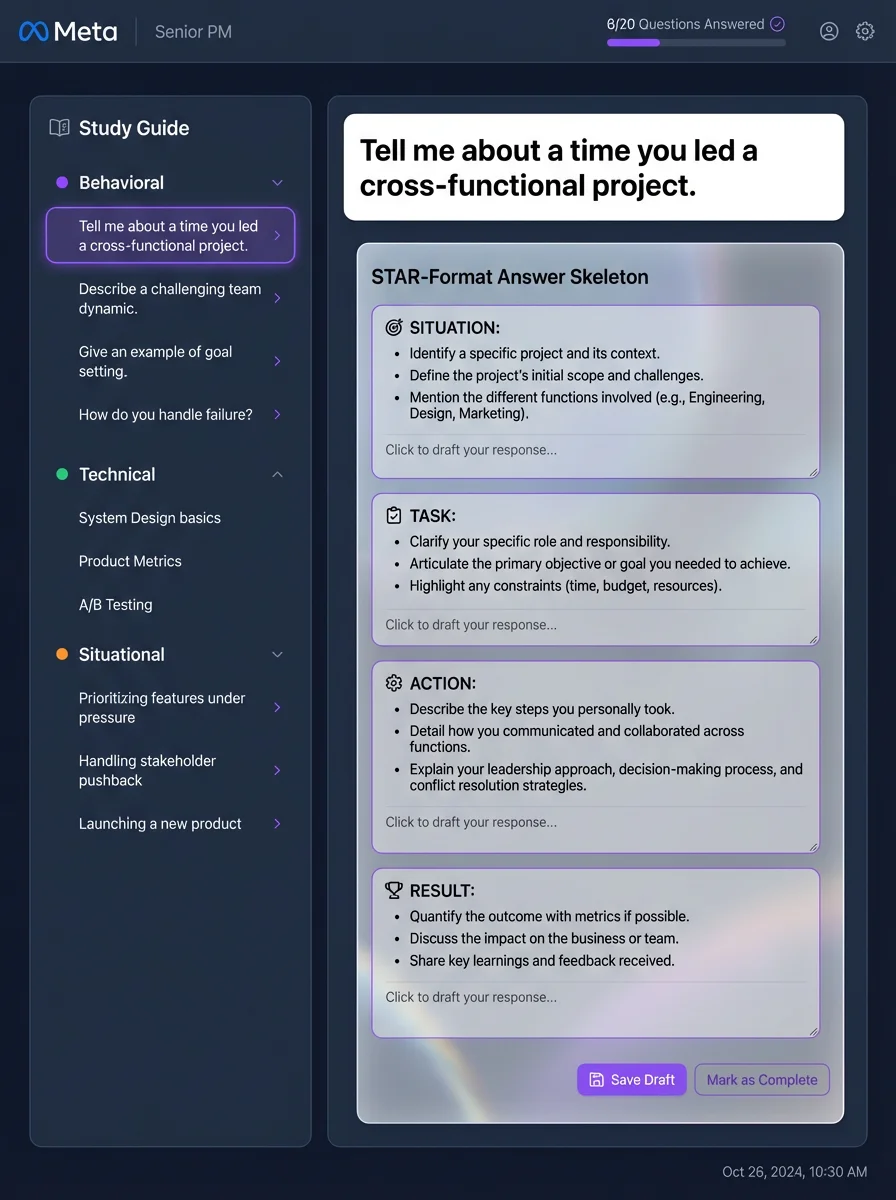
- Best practice: Use STAR and result-first framing.
- How Career Capybara helps: Mock sessions + diagnostics highlight where structure breaks.
Topic 3: Feedback Must Be Actionable
- Why it matters: Broad feedback is hard to execute.
- Best practice: Focus on top 2 recurring weaknesses per cycle.
- How Career Capybara helps: Post-session insights support targeted next-session plans.
Topic 4: Consistency Outperforms Cramming
- Why it matters: Performance stability comes from repetition, not one long prep sprint.
- Best practice: Run short, frequent practice loops.
- How Career Capybara helps: Fast setup and repeat sessions make ongoing prep lightweight.
Interview readiness is a system: context + structure + measurable iteration.
Related questions
Interview Prep FAQ
Does Career Capybara give feedback during the interview or after?
Can I practice using my real application context?
Can I review each question separately after the session?